

Rose – The Timeless Queen Of Floral Perfumery
Widely hailed as the “queen of all flowers,” rose is a cherished member of the Rosaceae family, with a legacy of use in fragrance, ritual, and wellness spanning thousands of years. Its delicate, layered aroma has cemented its status as one of the most precious and versatile ingredients in the global perfumery landscape.
The history of rose in fragrance dates back to ancient civilizations: the Greeks and Romans associated it with love goddesses Aphrodite and Venus, using rose water as a personal perfume and scattering petals at lavish banquets. In ancient Persia, rose was revered as a symbol of beauty and sacredness, where sophisticated cultivation and distillation techniques first emerged to extract its precious oil. As Roman influence spread across Europe, rose became a dual symbol in both religious and secular life, representing martyrdom in Christian iconography and chivalric romance in medieval court culture.
Today, the most prized varieties for perfumery include Rosa damascena (Damask rose) from Bulgaria, Turkey and Morocco, and Rosa centifolia (Cabbage rose) from France, each offering subtle nuances to the characteristic rose scent. It takes approximately 10,000 rose petals to produce a single gram of pure rose essential oil, making it one of the most luxurious raw materials available to perfumers.
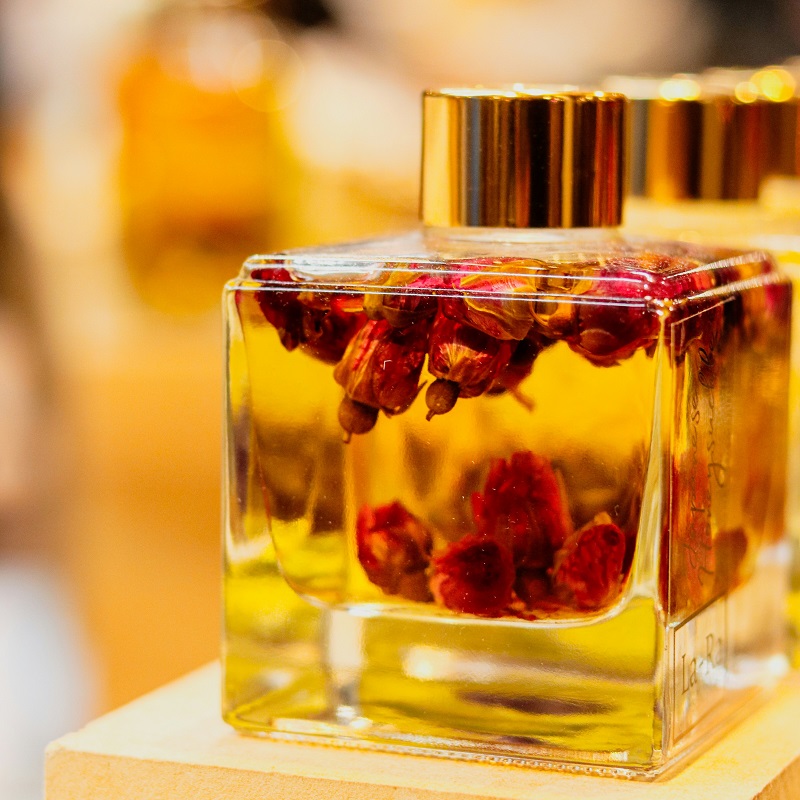
What Does Rose Smell Like?
Rose boasts a rich, multi-faceted floral aroma that balances sweet, honeyed warmth with soft, green freshness and subtle fruity undertones. Its complex scent profile is defined by key compounds including β-phenylethanol, which delivers the classic rosy sweetness, geraniol for its fresh, floral brightness, and trace components like β-damascone and rose oxide that add depth, a hint of spice, and that distinctive, almost dewy natural rose character.
As a middle to base note with excellent fixative properties, rose blends seamlessly with a wide range of other fragrance ingredients: it pairs beautifully with bright citrus notes for a fresh, uplifting composition, with warm spicy accords like saffron and pepper for a sensual, opulent effect, and with woody or musky base notes to create long-lasting, sophisticated fragrances. It appears in both feminine and masculine perfume formulations, adapting effortlessly from soft, romantic florals to bold, dark, and smoky compositions.
Rose is also a star ingredient in many iconic modern fragrances, from the crisp, clean Jo Malone Red Roses to the rich, velvety Frederic Malle Une Rose, proving its endless versatility for creative perfumery. For established and emerging perfume brands alike, rose remains a staple ingredient that adds instant elegance and emotional resonance to any formulation.
Where Does Rose Come From?
The highest quality rose essential oil is primarily cultivated in the world-famous Rose Valley of Bulgaria, the Anatolia region of Turkey, Morocco, and the Grasse region of France, where optimal climate and soil conditions produce blooms with the most intense, well-balanced aroma. The delicate flowers are hand-picked at dawn, when their scent is at its peak, to preserve the full spectrum of their fragrant compounds before the distillation process begins.
Rose essence is most commonly extracted through steam distillation, which yields the classic, rich rose essential oil, or through solvent extraction, which produces a softer, more rounded absolute that retains more of the flower’s natural top notes. Both extraction methods require meticulous precision to capture the full complexity of the rose’s scent, with distillation parameters carefully adjusted based on the intended end use of the oil.
At OGGNE Aroma, we source only the finest grade rose essences from trusted, sustainable suppliers around the world. Whether you require a precise fragrance duplication of a classic rose perfume or a custom-blended rose composition for a new product line, our master perfumers have the expertise to bring your vision to life. We offer wholesale fragrance oil options for businesses of all sizes, with formulations tailored for every application from fine perfumery to personal care products.

The Many Benefits of Rose
Beyond its unparalleled olfactory appeal, rose has been valued for centuries for its therapeutic and wellness properties. Long known as the ultimate romantic scent, it is widely recognized as a natural aphrodisiac that fosters intimacy, emotional connection, and a sense of calm luxury. In aromatherapy, rose oil is used to reduce stress and anxiety, uplift mood, and promote a sense of emotional balance and well-being.
Rose also offers notable benefits for skin care, making it a popular ingredient in moisturizers, serums, and face masks: it is known to soothe sensitive, dry, and aging skin, help balance sebum production, and deliver gentle antioxidant protection. Its soft, comforting aroma makes it a perfect choice for aroma diffuser oil in residential, commercial, and hospitality spaces, creating a welcoming, sophisticated atmosphere that feels both luxurious and calming.
The versatility of rose extends far beyond fine perfumery: it is a popular ingredient in home fragrance products including reed diffuser oil and scented candle oil, as well as personal care products, bath and body lines, and even automotive fragrance collections.
For centuries, rose has captivated cultures around the world with its timeless beauty, intoxicating scent, and wide-ranging benefits. If you are looking to incorporate this iconic floral ingredient into your product line, our team of master perfumers at OGGNE Aroma is ready to help you create a custom rose fragrance that perfectly aligns with your brand vision. Contact us today to discuss your fragrance needs and explore our full range of high-quality fragrance products.